
We build for you: scalable Every application is AI-ready. Add AI features where they make sense for your project. software solutions with Laravel
Benefits at a glance:
Laravel is the leading PHP framework for demanding web applications, and we make it the platform for your AI-powered digitalization. Whether SaaS platform, customer portal, or internal business software: our experienced developers design and build systems that are AI-ready from day one. Your application becomes AI-enabled when you need it, with AI features tailored to your use case.
The framework stands out with built-in security mechanisms that protect sensitive data and build trust with your customers. Optimized performance ensures fast response times and a seamless user experience. As an established, flexible, and future-proof framework, Laravel adapts perfectly to your growing requirements.
With AI-powered process automation, intelligent search, and data-driven personalization, we create web applications that do not just work but actively move your business forward. And thanks to our sprint calculator, you keep full cost transparency at all times.
Overview of our Laravel agency services.
- API Development
- System & Third-Party Integration
- Microservices & Cloud Architecture
- SaaS Platforms
- Customer Portals & Dashboards
- Multi-Tenant Systems
- Cart, Checkout & Order Flows
- PIM & Commerce Middleware
- Booking Systems & Configurators
- AI Integration & AI Agents
- Workflow Automation
- Legacy Modernization & Migration
- Technical Consulting & Code Audits
- Maintenance & Long-Term Support
Laravel API Development
Growth rarely fails because of ideas. It fails because of systems that do not talk to each other. We develop APIs that connect your entire infrastructure, from CRM and ERP to payment providers, marketing tools, and analytics. Whether you are a growing SME automating processes end to end for the first time or an established brand with a complex tech stack: versioned endpoints, granular authentication, and automated documentation create interfaces your team and your partners can rely on. Every API is designed for extension from day one, so you can connect new services without putting existing ones at risk.
- Multi-Tenant Architecture
- Freemium Models
- License Management
- Recurring Payments
- Customer Portals
- Real-Time Dashboards
- Horizontal Scaling
- Queue-Based Processing
- Role-Based Access Control
- API-First Architecture
- Automated Onboarding
- Webhook Integration
- OAuth & SSO
- Multi-Tenancy
Software & Web App Development
Customer portals, real-time dashboards, internal business software, or market-ready SaaS products: we develop web applications that are built for growth from the first line of code. Monetization is part of the plan, too: freemium models, license logic, and recurring payment processing integrate seamlessly into your application. Thanks to Laravel's queue system and horizontal scaling, your platform handles ten users just as reliably as millions. You keep full control over code, data, and infrastructure, built on an architecture that keeps pace with your ambitions.
Laravel E-Commerce Solutions
Not every project needs a full online shop. Often, individual commerce building blocks make the difference: a cart with custom pricing logic, an order flow for seminar or event bookings, a product configurator with real-time calculation, or a booking system for individual services and events. We develop these components as standalone Laravel modules, from PIM connections and commerce middleware to checkout flows with Stripe or PayPal, and integrate them seamlessly into your existing application. We also build complete e-commerce platforms with ERP connections, merchandise management, and DATEV export that process order volumes at scale. Whether a single component or a complete solution: you get exactly the commerce logic your business model requires.
AI Integration & Process Automation
Artificial intelligence only creates value once it is safely embedded in your existing business processes. Through a provider-agnostic abstraction layer, we integrate state-of-the-art cloud LLMs from OpenAI, Anthropic, and Google as well as privacy-compliant local models via Ollama. You switch between providers without touching a single line of code. With vector embeddings and Retrieval-Augmented Generation (RAG), your applications search company data semantically instead of by keywords alone. Our AI agents collaborate through MCP servers and shared skills to handle recurring tasks autonomously, from automated document analysis and structured data extraction to intelligent workflow automation. Every integration runs on your own infrastructure, with clearly defined access rights and full data sovereignty.
Our process for your Laravel application
Not every project starts from scratch, and not every project needs the same approach. That is why we work with two proven processes: one for new projects and one for taking over existing applications. Choose your scenario and see how we work.
Discovery & Requirements Analysis
Whether an internal tool or a customer-facing platform: we start with a structured kickoff. Together, we capture your business goals, existing system landscape, and technical constraints. The result is a clear project scope with prioritized requirements and realistic milestones.
Concept & Architecture
System architecture, data model, and UX/UI design take shape in close coordination with your team. Whether an MVP for a fast market entry or a scalable enterprise architecture with multi-tenancy: you review interactive prototypes and give feedback before a single line of code is written.
Iterative Development in Sprints
Our experienced developers deliver your project in short sprints, with code reviews, automated tests, and a CI/CD pipeline. You are actively involved after every sprint, review progress, and steer priorities. Our sprint calculator keeps you in full control of costs at all times.
Launch & Monitoring
After comprehensive end-to-end tests, we deploy to your production environment, whether shared hosting, your own server, or cloud infrastructure. Proactive performance monitoring and real-time alerting make sure issues are detected before your users notice them.
Maintenance & Further Development
Security updates, Laravel upgrades, and new features: we remain your technical partner. Whether you started with a small feature set or run a complex application, your software grows with your requirements and stays technologically up to date.
Code Audit & Assessment
We systematically analyze your existing codebase: architecture, dependencies, security vulnerabilities, test coverage, and technical debt. Whether the application was developed in-house or handed over by another agency, you receive a prioritized audit report as a solid basis for decisions.
Stabilization & Quick Wins
Critical security vulnerabilities uncovered in the audit, as well as bugs, are addressed immediately. We establish CI/CD pipelines, add missing tests, and stabilize deployment processes so your team and your users benefit from a more solid foundation right away.
Refactoring & Modernization
Step by step, we modernize outdated components, update Laravel and PHP versions, and untangle grown dependencies. Your application stays fully operational throughout, without interrupting day-to-day business, whether you serve a hundred users or a hundred thousand.
Feature Development & Extension
On the cleaned-up codebase, we develop new features and integrations. From API connections to your existing system landscape and process automation to intelligent functions that offer your users real value: every extension follows modern best practices with full test coverage.
Long-Term Support & Monitoring
Proactive monitoring, regular security updates, and performance optimization ensure sustainable operations. Whether you need a dedicated contact for your growing platform or targeted support on demand, we adapt to your needs.
Kostentransparenz
Mit unseren Kostenrechnern bieten wir Ihnen klare Einblicke über die erwartbaren Kosten unserer Zusammenarbeit. Erhalten Sie schnell und unkompliziert ein erstes Kostengefühl.
Sprint-Kalkulator
Bei größeren, langfristigen Softwareprojekten setzen wir auf ein dediziertes, agiles Team.
Durch die Anwendung von agilen Sprints gestalten wir die Entwicklung Ihres digitalen Vorhabens in kurzen, fokussierten Phasen, die höchste Effizienz, Flexibilität und eine enge Zusammenarbeit garantieren.
Nutzen Sie unseren Sprint-Kalkulator, um eine erste Kostenindikation für Ihr Projekt abzurufen.
Projekt-Kalkulator
Für Projekte mit klar definiertem Umfang bieten wir ein Festpreis-Modell. Sie erhalten ein hochwertiges Ergebnis zu einem vorab vereinbarten Preis, basierend auf Umfang und Zeitplan des Projekts. Voraussetzung hierfür ist ein Lastenheft, das alle Anforderungen und Funktionen der Website oder Webanwendung enthält.
Schnell und kurzfristig eine erste Kostenschätzung einholen? Unser Projekt-Kalkulator liefert sofort eine erste Kostenschätzung für ihr Projekt und ermöglicht Ihnen die individuelle Anpassung passend zu Ihren Bedürfnissen.
Servicekontingent-Konfigurator
Mit unserem Agentur-Retainer-Modell bieten wir die optimale Lösung für kontinuierliche Unterstützung mit der Garantie für priorisierter Kundensupport und verlässlicher Verfügbarkeit. Dieses Servicekontingent bietet Ihnen nicht nur finanzielle Klarheit und Planungssicherheit, sondern auch den Vorteil einer partnerschaftlichen Zusammenarbeit, die es ermöglicht, Ihre Projekte zielgerichtet weiterzuentwickeln.
Website:
Web Application:
Website:
Web Application:
Egal ob Projektmanagement, Design, Entwicklung oder Online-Marketing – wählen Sie zwischen 2 und 50 FTE, um die ideale Besetzung für Ihre Anforderungen zu konfigurieren.
Our Laravel agency team
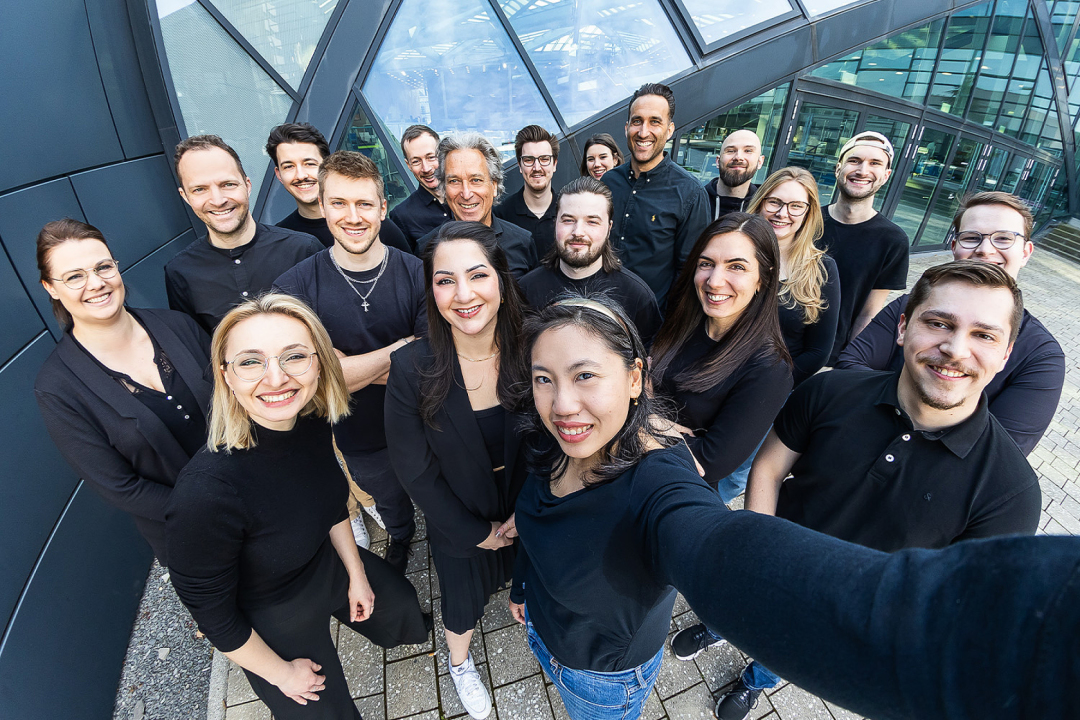
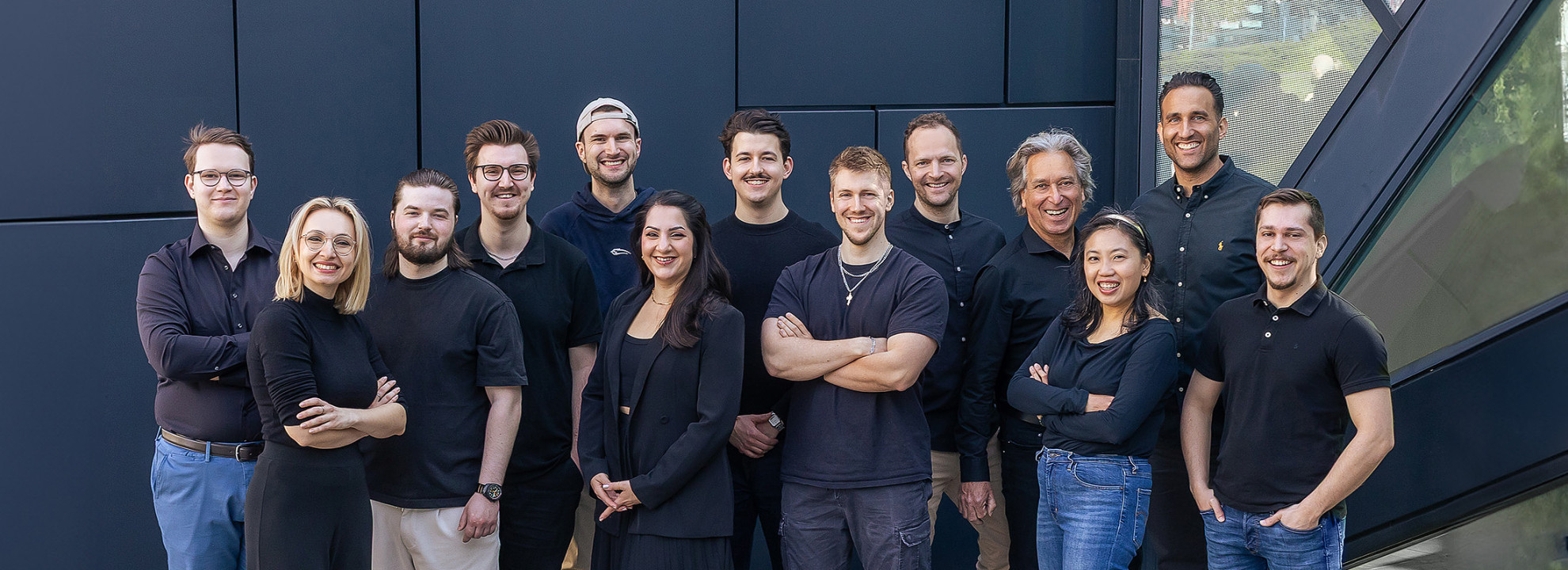
Case Studies
Learn-Management-System (LMS)
Discover "skillsforwork," the leading Software-as-a-Service (SaaS) Learning Management System (LMS), developed for a professional publishing division of VNR AG, that transforms companies by simplifying and optimizing employee training. This platform sets new standards in usability, security, and learning flexibility. Whether for onboarding, further education, or specialized courses, the LMS we developed is the solution for forward-thinking companies that value increasing productivity and employee engagement.
Read case study

Event-platform
For a prestigious DAX company in the automotive sector, we have developed and implemented a comprehensive event management and booking platform for motorsport events, including a fully integrated travel management system, in close collaboration with our lead partner, the METZLER : VATER group.

Online-orderning-platform
Primus Service stands for sustainable catering concepts in company cafeterias and social facilities nationwide in Germany. With the dailyBox, an online ordering platform has been created that enables employees and external guests to order food digitally, including payment.
Read case study

Why the Laravel agency mindtwo?
Where should we start? Reliability, know-how, experience: everyone advertises with those. Here at mindtwo, we have certain core values that are unshakeable and accompany us through every step of our daily work. If these values match yours, we have the perfect foundation for a successful collaboration:
Customer-centric approach: You, as our client and project partner, are at the heart of what we do. We listen closely to understand your requirements and transform your vision into reality. Our team works closely with you to make sure your web application meets your expectations exactly.
Reliability and quality: Meeting deadlines and delivering high-quality web applications are second nature to us. With our professional approach and thorough quality control, we make sure that your web application runs smoothly and meets your requirements.
Uncompromising transparency: No one likes buying a pig in a poke. With transparent time tracking, close contact, and, if needed, regular meetings, we keep you continuously updated on the current project status.
AI-first mindset: We actively use AI in our own development and help you integrate AI features into your application where they create real value. This accelerates development, raises code quality, and creates systems that are ready for the next generation of digital workflows.
Advantages of our Laravel agency
Tailor-made, secure, and AI-powered software solutions, developed by experienced in-house developers for companies that want to lead digitally.
AI as a competitive advantage
We integrate AI where it creates real business value: automated document processing that saves your team hours. Intelligent search that gets customers to the right product faster. Data-driven recommendations that increase your revenue. At the same time, we use AI-assisted code reviews and automated tests in our own development process, for higher code quality and shorter development cycles.
Architecture that grows with you
Your application starts with ten users and needs to scale to ten thousand? That is exactly what we design for from day one: multi-tenancy for SaaS products, queue-based background processing for compute-intensive tasks, and caching strategies that keep response times in the millisecond range even under heavy load. You are not investing in a solution for today, but in a platform for the years ahead.
Security without compromise
Data protection and IT security are not an add-on but a core principle of our development. Every application ships with encrypted data storage, role-based access control, and automated security audits. Regular dependency updates and proactive monitoring close known vulnerabilities before they become a risk, keeping your customer data and business processes protected at all times.
Integration instead of silos
Your CRM does not talk to your ERP, and your payment provider delivers data nobody wants to retype manually? We develop documented, versioned APIs that connect your existing system landscape into one seamless ecosystem. Whether Stripe, HubSpot, SAP, or industry-specific applications: data flows automatically to where it is needed.
Full cost control
No project without clear numbers: with our sprint calculator, you receive a detailed effort estimate per feature before the project starts. During development, we work in short sprints with transparent time tracking. You always see what your budget is spent on and can adjust priorities between sprints. No hidden costs, no unpleasant surprises on the final invoice.
Partnership instead of one-off projects
After launch, the real work begins: evaluating user feedback, optimizing performance, prioritizing new features. We remain your technical partner, with regular Laravel and PHP upgrades, proactive performance monitoring, and a dedicated contact who knows your codebase. Your application does not just keep running. It keeps getting better.
Our technology solutions for secure and scalable web applications
Tailor-made technology solutions are crucial for companies that value security, performance, and scalability. With our expertise, we create future-proof, high-performance web applications.
Industries and use cases for Laravel
Different industries, one shared standard: software that simplifies processes and enables growth. Here are some examples of how we solve concrete challenges in your industry.
SaaS Platforms & Multi-Tenant Systems
Subscription management, user-specific dashboards, and flexible billing models, all in one platform. Role-based access control ensures every tenant only sees their own data, while you keep the overview through a central admin panel.
Finance & Insurance Software
Customer portals for contract and claims management, automated application flows, and audit-proof document storage. Encryption and GDPR compliance come as standard. Intuitive interfaces reduce the processing time per case and noticeably relieve your back office.
E-Commerce & Marketplaces
Custom shop systems, B2B ordering platforms, and marketplaces with vendor management, from merchandise management connections and payment processing to automated invoicing via DATEV. Intelligent product recommendations increase the average cart value.
Healthcare & Medical Technology
Patient portals, laboratory connections, device management, and digital diagnostic platforms, from medical practices, labs, and medical device manufacturers to hospitals. Automated workflows shorten the time from sample to result and relieve specialist staff along the entire care chain.
Education & E-Learning
Learning management systems with course builders, progress tracking, and automatic certificate generation. Interactive quizzes and exercises keep participants motivated, while intelligent learning paths adapt automatically to each learner's level of knowledge.
Industry & Manufacturing
Production planning tools, IoT dashboards for machine monitoring, and digital maintenance logs. Sensor data is visualized in real time and large data volumes are reliably processed in the background, for informed decisions on the shop floor.
HR & Recruiting
Applicant tracking systems, employee portals with digital personnel files, and onboarding workflows. From job postings and candidate evaluation to contract management: an end-to-end digital process with automated pre-qualification.
Customer Portals & Self-Service
Personalized customer areas with real-time status displays, ticket systems, and interactive dashboards. Reactive interfaces feel like a native app. Your customers handle requests on their own, and your service team is relieved.
Product Configurators & CPQ
Visual configurators for products that need explanation, from furniture systems and vehicle options to industrial components. Smooth 2D/3D previews with real-time pricing and automatic quote PDF generation shorten your sales cycle.
Legacy Modernization & Performance
Outdated PHP applications, grown monoliths, or slow systems: we modernize your existing software step by step and without interrupting operations. Laravel upgrades, database optimization, and caching strategies deliver measurable performance gains, while structural refactoring secures long-term maintainability.
Consulting, Code Audits & Maintenance
Whether technical consulting before a relaunch, an independent code audit of your existing application, or a long-term maintenance contract: we are at your side as a reliable technical partner. Regular security updates, proactive monitoring, and a dedicated contact keep your software stable and secure in the long run.
Frequently asked questions
The most important questions and answers about working with our Laravel agency.
Can a Laravel application handle going viral or seasonal traffic spikes?
Yes, if the architecture is right. Laravel scales from a hundred to a hundred thousand concurrent users, but not through a single tool. It takes the right sequence of measures.
Level 1: Foundations every project gets
- Caching: Configuration, routes, views and frequent queries live in the cache, usually Redis
- Queues: Email sending, PDF generation, imports, exports and image processing run in the background, the user does not wait
- Database: Indexes on all filter and sort columns, eager loading instead of N+1 queries
- CDN: Images, scripts and stylesheets are delivered globally, not from the application server
This level absorbs most traffic spikes. It is standard, not extra effort.
Level 2: More throughput per server
- Laravel Octane: The application stays loaded in memory between requests, the framework boot per request is eliminated. Based on FrankenPHP, Swoole or RoadRunner
- Read replicas: Read queries go to database copies, writes to the primary server
Level 3: Horizontal scaling
- Several application servers behind a load balancer, with zero-downtime deployments
- Laravel Cloud or Laravel Vapor: Managed infrastructure that automatically starts additional capacity under load and scales it back down after the peak
- Container orchestration on request, if your IT already operates a suitable platform
Measure first, then build
Before seasonal peaks we run load tests and observe production with Laravel Nightwatch. We optimize what actually slows things down, not what theoretically might.
The bottom line: Your application stays responsive, and you only pay for scaling when it is needed. We bring existing applications up to speed as part of our performance optimization.
Can we integrate AI features into our Laravel application?
Yes, and Laravel is now particularly well positioned for it. The Laravel team maintains its own AI SDK that integrates language models from various providers into the application with a few lines of code.
Typical use cases in business applications
- Text and metadata: Automatically generate summaries, product descriptions, categorization and SEO metadata, with editorial approval
- Understanding documents: Read invoices, contracts or inquiries and transfer them into your database in structured form
- Search and knowledge base: Semantic search across your own documents, answers with source references instead of free guessing
- Assistants: Chat functions for support, sales or internal knowledge questions, connected to your real data
- Classification and routing: Automatically prioritize incoming requests and assign them to the right team
How it works technically
- Provider-independent: A uniform interface for models from Anthropic, OpenAI, Google and others. The provider can be switched without rebuilding the application
- Structured output: The model delivers validated data structures, not free text that has to be parsed
- Tools: Models can call defined functions of your application, such as looking up an order, without direct database access
- Queues: AI calls run in the background, with retries on errors, so the interface does not wait
What we pay attention to
- Data protection: Which data the model sees is defined per feature. European providers or models on your own infrastructure when your requirements demand it
- Cost control: Caching, limits and evaluation per feature, so the bill stays predictable
- Quality assurance: Automated tests for AI features, human approval steps where errors would be expensive
The bottom line: AI becomes a building block of your application like search or reporting, with clear boundaries, measurable benefit and your data under control. We describe our approach under web application development.
Can you take over and rescue existing, problematic Laravel projects?
Yes, this is a core part of our work. Quickly built MVPs often hit limits in scalability, security or maintainability after one to two years. We take them over without interrupting operations.
Phase 1: Technical audit
Before we change anything, we know what we are dealing with:
- Code quality: Static analysis with PHPStan, detection of anti-patterns, test coverage
- Dependencies: Outdated packages, known vulnerabilities, Laravel and PHP version status
- Performance: N+1 queries, missing indexes, memory consumption, caching
- Security: OWASP Top 10, authentication, authorization logic, handling of sensitive data
- Architecture: Business logic mixed with presentation, tight coupling, accumulated workarounds
You receive a prioritized report: what is critical, what is expensive, what can wait.
Phase 2: Gradual modernization
We do not recommend a complete rebuild, but the strangler fig pattern: new, clean modules grow alongside the legacy system and gradually take over its tasks.
- Critical issues first: Security vulnerabilities and stability problems are fixed before anything else
- Module by module: Each area is extracted, tested and switched over individually, the system stays online throughout
- Safeguards: Automated tests protect every migrated module, a rollback is possible at any time
- Data migration: Where data structures change, old and new structures run in parallel for a transition period until the new one is reliably populated
Phase 3: Stable operations
- Monitoring: Laravel Nightwatch and error tracking, so problems surface before users report them
- Health checks and backups: Monitoring of critical components and verified recovery
- Maintenance plan: Regular updates instead of another rescue operation in two years
The bottom line: An unstable black box becomes a maintainable, scalable system again. The starting point is a technical audit as part of our consulting, the implementation runs as web application development.
Do you use a "headless" approach or classic server-side rendering?
Both, depending on the requirements. Laravel offers four viable paths for the interface today. The choice depends on your team, your target platforms and the role of SEO.
Option 1: Filament and Livewire
Server-side rendering with reactive components, without a separate JavaScript frontend. Ideal for internal business applications, admin panels, customer portals and SaaS products where a backend team delivers the complete application. With Filament, tables, forms and dashboards are built from ready-made components, with Livewire custom interactions.
Option 2: Inertia.js with Vue or React
A monolith with the user experience of a single-page application: Laravel controls routing and data, the frontend renders Vue or React components. Ideal if you have a frontend team, need complex interfaces or want to use an existing design system. More under Inertia.js.
Option 3: Headless with a separate frontend
Laravel delivers a REST or GraphQL API, the interface is built separately, for example with Next.js or Nuxt.js for SEO-critical pages, or with React Native and Flutter for mobile apps. Ideal when several frontends use the same data. Authentication runs through Laravel Sanctum or Passport, documentation through OpenAPI.
Option 4: Classic Blade
Server-rendered pages without a JavaScript framework. For content-driven websites, landing pages and anything that needs to load fast and index well, still the simplest and most robust choice.
How we decide with you
- Team: Are there frontend specialists, or does a backend team deliver everything?
- Platforms: Web only, or also mobile and third-party systems?
- SEO: Does the application have to be found publicly?
- Budget and time: Quick start or long-term platform with several clients?
The bottom line: An architecture that fits your business, not the other way around. Often it is a combination, for example Filament for the back office and a headless frontend for the public part. We describe the API side under API development.
How do you ensure the security and GDPR compliance of a Laravel application?
Laravel comes with solid baseline protection, but security and data protection are created in the implementation. We treat both as requirements from day one, not as a checkpoint before launch.
What Laravel brings
- Protection against the most common attacks: CSRF tokens, automatic escaping in Blade against XSS, prepared statements against SQL injection
- Authentication: Secure password hashing, rate limiting against brute force, two-factor authentication, passkeys
- Authorization: Policies and gates for fine-grained access rules
- Encryption: Encrypted database fields and signed URLs as built-in tools
What we add
- Permission concept: Documented in table form, secured with tests, down to the visibility of individual fields
- Dependencies: composer audit in CI, security releases are installed promptly
- Static analysis and reviews: Every change is checked before it goes live
- Security headers and configuration: Content Security Policy, HSTS, secure cookies, hardened servers
- Penetration tests: On request by external reviewers before launch and at fixed intervals
GDPR in the application, not just in the documentation
- Data minimization: Only what the purpose requires is collected
- Deletion concept: Retention periods and automated deletion routines are part of the software
- Access and export: Data subject rights become actionable through export functions
- Logging: Audit log for access to and changes of personal data
- Location: Hosting and backups in Germany or the EU, data processing agreements with all service providers
- Consent: Consent management and tracking only after approval
What we do not do
We are not legal advisors. Privacy policy, records of processing activities and legal assessment are coordinated with your data protection officer or law firm, and we implement the technical requirements.
The bottom line: An application that withstands audits because security and data protection are anchored in code and configuration. We assess existing applications as part of our consulting.
How do you prevent our software from becoming "legacy code" in 2 years?
Software only becomes outdated when it is poorly maintained or built without standards. We ensure longevity through an "Evergreen Architecture" concept with four building blocks.
1. Test-Driven Development (TDD)
We do not deliver code without accompanying automated tests. Our testing stack:
- Pest PHP: Modern, elegant test syntax for Laravel
- Feature tests: End-to-end tests for complete user flows
- Unit tests: Isolated tests for business logic
- Browser tests (Dusk): Automated UI tests
The tests serve as living documentation that shows how the software is supposed to work, as a safety net against regressions during updates, and as refactoring confidence for safe code improvements.
2. Static code analysis
We enforce code quality through automated tools:
- PHPStan/Larastan (level 8+): Detects type errors before execution, identifies unreachable code and validates method calls and parameters
- Laravel Pint: Consistent coding style across the entire team through automatic code formatting based on PHP-CS-Fixer
- Rector: Automatic code modernization, refactoring patterns and upgrade helpers for new PHP features
3. Continuous framework updates
We use Laravel Shift for automated upgrades:
- Automatic migration to new Laravel versions
- Dependency updates for core packages
- Detailed commit history with change comments
- Atomic commits for easy review processes
On top of that come scheduled maintenance windows: quarterly security updates, annual major version upgrades, dependency audits with composer audit and regular performance profiling sessions.
4. Documentation and knowledge transfer
- Architecture documentation: Architecture Decision Records (ADRs)
- API documentation: OpenAPI/Swagger specifications
- Inline code documentation: PHPDoc with type hints
- Onboarding guides: For new developers joining the team
The result: Your application stays at a "greenfield" level for years to come: maintainable, secure and modern.
How does my project specifically benefit from your cross-industry experience?
Innovation rarely happens in a silo. It comes from transferring proven concepts. We carry technical and process patterns that have proven themselves in one industry over to the next.
The strategic advantage
Pure industry specialists often stay locked into established ways of thinking. We recognize solution patterns that have already proven themselves in other sectors and spare you detours that others have already taken.
Real-world examples
- Finance to B2B portals: High-security authentication flows and two-factor methods from banking are adapted for sensitive customer portals
- E-commerce to business applications: Caching strategies and queue management from high-traffic shops make internal business applications faster
- Healthcare to logistics: Audit trails and compliance workflows from healthcare ensure seamless traceability in industrial supply chains
- Ticketing to checkout: Peak-load management from event platforms secures critical ordering processes
What this does not mean
Cross-industry does not mean industry-agnostic. We work out the professional requirements, regulation and vocabulary of your industry together with your subject matter experts at the start of the project.
The bottom line: You do not get an off-the-shelf solution, but an architecture that combines proven patterns from the most demanding digital sectors, tailored to your competitive advantage. Learn more about our approach to web application development.
How does the handover work if we build our own in-house team later on?
Planned and documented. We see ourselves as a partner that empowers your team, not as a permanent dependency. That is why every application is designed for handover from the start.
What documentation you receive
- Architecture: System overview, domain model, database schema and Architecture Decision Records that explain why decisions were made the way they were
- Code: Fully documented classes, a README per module, OpenAPI specification for interfaces, local development environment via Docker
- Operations: Deployment process, monitoring, backup and recovery, a guide to common problems
How the knowledge transfer works
- Architecture walkthrough: One to two days of joint code review, remote or on site
- Pair programming: New features and bug fixes are built together until your team is confident
- Training: Testing strategy, deployment pipeline, Eloquent optimization, queues, caching, security
Two transition models
- Gradual handover: First we develop and your team observes, then we develop together, then your team develops and we review. A typical transition takes around six months, you set the pace
- Support on demand: Your team takes over, we remain available for code reviews, architecture questions, security updates and agreed response times for critical issues
Why this works
The code is handover-ready from the start: a consistent structure in every module, high test coverage so new developers can refactor safely, clear naming conventions and no undocumented workarounds.
The bottom line: Your in-house team can take over the application completely, with us in the background for as long as you wish. More under project support.
How often does a Laravel application need updating and what does maintenance cost?
Laravel has a fixed rhythm, and that is an advantage. You know in advance when work is due and can budget for it.
The Laravel release rhythm
- One major version per year, with documented changes and an official upgrade guide
- Bug fixes for each major version for around 18 months
- Security updates for around two years
An application therefore does not have to be upgraded immediately every year. Staying within the security window keeps you on the safe side.
What comes up regularly
- Monthly: Security updates for Laravel, PHP and dependencies. Automated checks with composer audit, installed with tests as a safety net
- Annually: Upgrade to the current Laravel major version, usually together with the PHP version. Tools such as Laravel Shift handle the mechanical part
- As needed: Adjustments to third-party systems whose interfaces change
What an upgrade costs
- Cleanly built application with tests: A major upgrade is an item of a few days
- Application without tests or with overridden framework classes: Considerably more, because every change has to be checked manually
- Postponed upgrades: Skipping three versions means paying for them bundled and with interest. That is why we plan annually
Our maintenance model
- Monitoring: Laravel Nightwatch reports errors and performance problems before users notice them
- Fixed maintenance windows: Updates are planned, tested on staging and accepted
- Transparency: You see what was installed and why
The bottom line: Maintenance is a predictable quantity, not a surprise. Our maintenance packages cover security updates, upgrades and monitoring, including for applications we did not build.
Is Laravel suitable for SaaS products and multi-tenant platforms?
Laravel is one of the most widely used frameworks for SaaS products. Billing, tenant separation, teams and API access are solved problems you do not have to reinvent.
What the ecosystem brings
- Subscriptions and billing: Laravel Cashier integrates Stripe or Paddle, including trials, plans, invoices and failed payments
- Teams and tenants: Users belong to organizations, data is separated per tenant, roles apply per team. Filament provides ready-made components for this, including a tenant switcher
- API access for customers: Laravel Sanctum and Passport provide access tokens and OAuth2 so your customers can build their own integrations
- Background processing: Queues and scheduler for reports, synchronizations and notifications at scale
Architecture decisions we make early
- Data separation: One database with a tenant column for most products, separate databases per customer when compliance or size require it
- Custom domains: Customers reach the application under their own address, with their own branding
- Feature flags: Features are enabled per plan or customer, without special versions
- Scaling: Stateless application servers, caching and queues from the start, so growth does not force a re-architecture
From MVP to product
We start with the core that proves willingness to pay and expand it in sprints. The architecture is designed for multi-tenant operation from the start, even if the first customer is still alone. This saves the later rebuild that regularly costs SaaS founders months.
Operations and availability
- Monitoring: Errors, performance and background jobs in view with Laravel Nightwatch
- Deployments without downtime: New versions go live without customers noticing
- Scalable infrastructure: Managed servers or Laravel Cloud, depending on your growth plan
The bottom line: A SaaS product that runs on the same foundation from the first customer to thousands of tenants. We describe our approach under web application development.
Laravel or Symfony, WordPress, Node.js: which fits our project?
Each of these tools has an area where it is the right choice. We recommend Laravel for web applications with business logic. For other projects, we tell you just as clearly what fits better.
Laravel versus Symfony
- Common foundation: Laravel uses many Symfony components under the hood. Both are mature and secure
- Difference: Symfony is a toolkit with maximum configurability, Laravel relies on conventions and a cohesive ecosystem of first-party packages
- In practice: Laravel gets to results faster, Symfony has advantages in large corporate landscapes with their own standards and existing Symfony teams
Laravel versus WordPress
- WordPress is a content management system. For content pages, blogs and marketing websites without complex business logic, it is a fast, inexpensive choice
- Laravel is an application framework. As soon as user accounts, roles, workflows, calculations or interfaces come into play, WordPress with plugins becomes a maintenance burden, while Laravel stays controllable
- Common combination: Marketing website on a CMS, application on Laravel, connected through an API
Laravel versus Node.js
- Node.js shines in real-time communication, streaming and when frontend and backend teams should speak the same language
- Laravel delivers more structure out of the box: database access, authentication, queues, validation and admin interfaces are part of the ecosystem rather than individual decisions
- In practice: For business applications, Laravel is productive faster and easier to staff, and for real-time core components we add a Node.js service where needed
Laravel versus low-code
Low-code platforms start quickly, but come with license costs per user, limits with complex logic and your data at the vendor. Laravel with Filament delivers comparable speed for standard functionality, with your own code and your own infrastructure.
The bottom line: For portals, business applications, SaaS products and APIs, Laravel is our standard recommendation. For content sites we recommend a content management system. We make the decision with you as part of our consulting.
Microservices or monolith: which architecture approach do you follow?
As a rule, we build a modular monolith. One deployment, one database, clearly separated business modules. Microservices only when a specific module demonstrably needs them.
Why we do not start with microservices
Premature microservices bring network latency, distributed transactions, operational overhead for several services and a team that maintains orchestration instead of business logic. Many companies have gone down this road and come back. Most applications do not need a distributed architecture, they need a clean one.
Our structure
- Autonomous modules: Every business module has its own namespace, its own migrations, its own service provider and defined interfaces to other modules
- Event-driven communication: One module fires events, others react to them. Loose coupling without network overhead
- Service contracts: Where direct calls are necessary, they run through interfaces, not through the internal classes of other modules
- Queues: Time-uncritical processes run asynchronously in the background
What you get out of it
- Speed: One repository, one deployment, one transaction, simple debugging
- Cost: One server or cluster instead of dozens of services with their own monitoring
- Growth path: If a module later needs to scale independently, such as billing or a public API, it can be extracted as a standalone service thanks to the clean boundaries, without jeopardizing the overall system
The bottom line: Pragmatic scalability without overengineering. We make the architecture decision with you in the concept workshop and assess existing systems as part of our consulting.
Our internal processes are very complex. How do you ensure the software reflects them correctly?
We do not start with code, we start with your business domain. The software is structured along your business processes, not along technical layers.
Step 1: Joint modeling
Before a single line is written, we model the domain with your subject matter experts, for example in event storming workshops. The result is a shared language: terms such as order, approval or cancellation mean exactly the same in the code as they do in your company.
Step 2: Structure by business area
We divide the application into clearly delineated domains. An example for a trading system:
- Orders: Shopping cart, checkout, order status
- Inventory: Stock levels, availability, reservations
- Billing: Invoicing, payment processing, dunning
- Customers: Master data, login, roles
Each domain has its own models, actions, jobs and services. Responsibilities do not mix.
Step 3: Business logic in one place
- Actions: Every business operation, such as "approve order", is its own testable class instead of logic scattered across controllers
- Value objects and data objects: Monetary amounts, periods or addresses carry their own rules and cannot be created in invalid states
- Events: Domains communicate through events, so a new process can be attached without changing existing ones
The key advantage
This prevents the classic loss in translation between business departments and IT. When your process changes, the code changes in exactly one traceable place. Rules that proved critical in the workshops are locked in with automated tests.
The bottom line: Software that reflects your processes and grows with them. The starting point is our concept workshop, more on implementation under web application development.
What does a Laravel application cost and how long does development take?
The honest answer: it depends on the scope of features, not on the framework. Laravel lowers the cost of standard functionality. The effort concentrates on your business logic, integrations and data.
Experience values for orders of magnitude
- Focused tool or MVP: A few core functions, one user group, no complex interfaces. Around 6 to 10 weeks to the first productive version
- Business application or customer portal: Several modules, roles, reporting, one or two external systems. Typically 3 to 6 months
- Platform or SaaS product: Multi-tenancy, billing, public API, several frontends. From 6 months, followed by continuous development
What drives the effort
- Business logic: Approval processes, calculations, status models. This is where the value and the effort lie
- Integrations: Every interface to ERP, CRM, payment provider or legacy system brings coordination, error handling and tests
- Data migration: Cleaning and transferring legacy data is regularly underestimated
- Interface: Filament configuration is fast, a custom frontend with its own design is a work package of its own
- Compliance: Audit trails, deletion concepts and permissions to specification cost concept time
How we make costs predictable
- Concept workshop: Requirements, data model and priorities, followed by a reliable estimate
- Sprints: A runnable version every two weeks that your business departments test. You control the priorities
- Billing models: Fixed price for a clear scope, agile time and materials for an open scope, or a dedicated team as a monthly operating cost
Running costs after launch
Hosting, maintenance, security updates and further development. As a rule of thumb, many companies budget 15 to 20 percent of the development cost per year for operations and maintenance.
The bottom line: A reliable figure exists after the requirements analysis, not before. The concept workshop delivers it, and we describe our billing models under web application development.
Where does our Laravel application run? Hosting, location and data protection
Wherever you want. Laravel runs on any PHP-capable server, in any cloud and in your own data center. We recommend the option that fits your data protection and operational requirements.
Three proven options
- Managed servers in Germany or the EU: Virtual or dedicated servers at European providers, provisioned and maintained via Laravel Forge or comparable tools. The standard for most mid-sized clients, GDPR-compliant and cost-transparent
- Laravel Cloud: The managed platform from the Laravel team with automatic scaling, databases and deployments from a single source. Ideal if you do not want your own operations and expect traffic peaks
- Your own infrastructure: Existing servers, private cloud or the container platform of your IT. We deliver container images and deployment pipelines, your IT operates them
What we set up in every case
- Deployment pipeline: Automated delivery with tests, without downtime
- Staging environment: Acceptance of new versions before going live
- Backups: Automated, encrypted, with verified recovery
- Monitoring: Laravel Nightwatch for errors, performance and background jobs
- Encryption: TLS for all connections, encrypted database fields for sensitive data
Data protection and data sovereignty
- Location: Servers and backups in Germany or the EU when your requirements demand it
- Data processing agreements: Contracts with all service providers involved
- Access: Role-based access to the infrastructure, logged
- Deletion concepts: Retention periods and deletion routines are implemented in the application, not just documented
The bottom line: You keep sovereignty over your data and your infrastructure. Whether we run operations or your IT does is something we decide together. Our maintenance packages secure ongoing operations.
Why Laravel? What makes the framework the right choice from a business perspective?
Laravel is the most widely used PHP framework and one of the most active open source projects on the web. For businesses, what matters is less the technology than what it means: availability of developers, predictability and an ecosystem that has already solved the standard tasks.
Maturity and reliability
- Continuously developed since 2011, with a fixed release rhythm and clearly communicated support periods
- Backed by a company with commercial products for hosting, monitoring and deployment that has an economic interest in its continued existence
- MIT license: No license costs, no vendor lock-in
Ecosystem instead of custom builds
- First-party packages for authentication, API tokens, queues, search, payments, monitoring and deployment
- Filament and Livewire for interfaces without a separate JavaScript frontend
- Tens of thousands of community packages, vetted and widely used
Availability of developers
PHP powers a large part of the web, and Laravel is the standard within it. You will find developers, agencies and freelancers worldwide, and your code remains readable to others because Laravel prescribes conventions.
Cost-effectiveness
- Fast start: Standard functionality is ready, budget goes into your business logic
- Inexpensive operation: Runs on any PHP-capable server, in the cloud or on your own hardware
- Predictable maintenance: One major version per year, upgrades with tooling support
Where Laravel is not the first choice
For pure content sites without business logic, a CMS is enough. For highly specialized real-time systems with extreme latency requirements, there are more suitable tools. For web applications, portals, SaaS products and APIs, Laravel is our standard recommendation.
The bottom line: Laravel is an investment you will not regret in five years. We accompany you from concept to operations, see Laravel development.
Thank you for your trust!
We have safely received your message and are delighted about your interest. Our team is already reviewing your inquiry carefully and will get in touch with you within one working day.
Should you have any further questions or require additional information in the meantime, please do not hesitate to contact us. We are here to assist you and make your concerns our highest priority.
Insights
Human-on-the-loop: The Middle Autonomy Model
-
Webdevelopment
22. June 2026
Ralph Wiggum as a Method: What Autonomous AI Coding Loops Mean for Software Commissioning
 Jonas Emde
-
Webdevelopment
21. May 2026
Developing Better Abstractions: How Declarative API Design Future-Proofs Software Projects
Jonas Emde
-
Webdevelopment
14. May 2026
Implementing Code Reviews Correctly: Processes, Communication and Quality in Software Development
Jonas Emde
-
Webdevelopment
11. May 2026
Agent-based Software Development: When Writing Code Becomes Secondary
Jonas Emde